



Stablecoin Regulation Global: Navigating the Future of Digital Currency
As the cryptocurrency landscape evolves, one of the most pressing questions is how regulations around stablecoins will develop globally. With the surge in interest and investment in digital currencies, understanding these regulations has become crucial for investors, businesses, and regulators alike.
Understanding Stablecoins and Their Importance
Stablecoins are digital currencies designed to maintain a stable value against a reserve asset, like the US dollar. They play a key role in the cryptocurrency ecosystem by providing a bridge between traditional fiat currencies and the volatile crypto market. In 2024 alone, the global adoption of stablecoins soared, with a market capitalization surpassing $150 billion due to their ability to mitigate risks associated with price volatility.
- Stablecoins help facilitate seamless transactions.
- They enable easier access to decentralized finance (DeFi) applications.
- They serve as a stable store of value in an otherwise unpredictable market.
As regulations continue to evolve, understanding the different categories of stablecoins — fiat-collateralized, crypto-collateralized, and algorithmic stablecoins — is essential for stakeholders.
The Global Regulatory Landscape
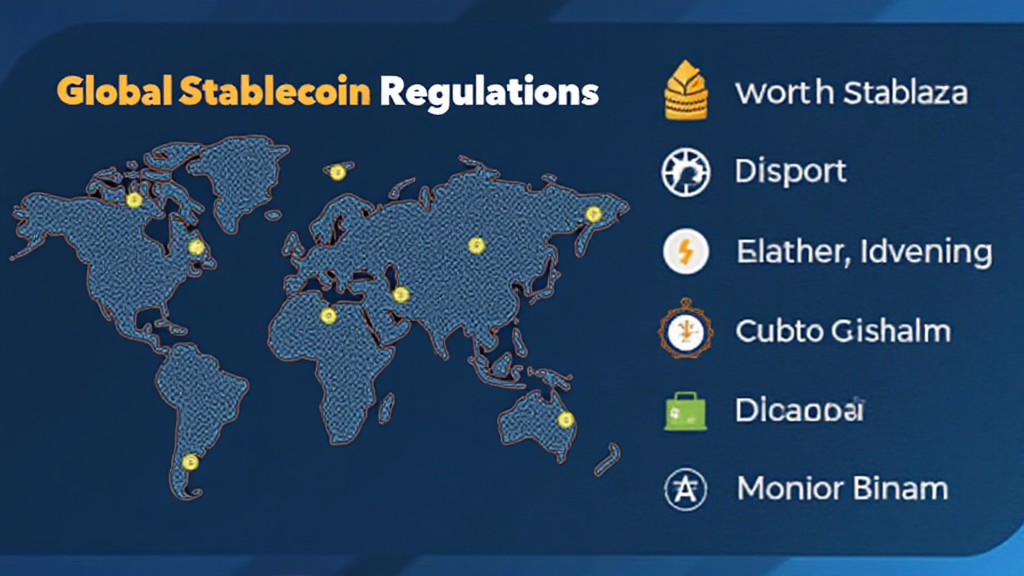
Regulations surrounding stablecoins vary significantly across jurisdictions. In the United States, the Financial Crimes Enforcement Network (FinCEN) has begun to draft guidelines aimed at improving transparency and accountability for stablecoin issuers. Meanwhile, the European Union is working on the Markets in Crypto-Assets (MiCA) regulation, expected to create a comprehensive framework for all crypto assets, including stablecoins.
Key Regions and Their Approaches
- United States: Focus on protecting consumers and preventing illicit activities.
- European Union: Comprehensive regulation with an emphasis on market integrity and consumer protection.
- Asia: Countries like Singapore and China are testing their own digital currencies and considering unique regulations.
For example, Singapore’s Monetary Authority has established a clear licensing requirement for stablecoin operators while promoting innovation within the market.
Challenges Facing Global Stablecoin Regulation
Despite the progress, several challenges hinder the establishment of a unified global regulatory framework. These include:
- Lack of Consensus: Different jurisdictions have different priorities and approaches, leading to regulatory fragmentation.
- Technological Advancements: The rapid pace of innovation in blockchain technology outstrips current regulatory measures, creating enforcement difficulties.
- Financial Stability Risks: Authorities express concerns regarding the potential impact of stablecoins on monetary policy and systemic risks.
Like a bank vault for digital assets, regulations should ensure the safety and security of funds while not stifling innovation.
The Role of Decentralized Governance in Regulation
Decentralized governance models offer solutions to standardize regulations across borders. These models allow stakeholders to contribute to the design and implementation of stablecoin protocols, fostering a collaborative approach to regulatory compliance.
This governance structure can also enhance transparency and build trust within the community, enabling regulators to engage more constructively with the crypto ecosystem.
Localizing Regulations: Vietnam’s Crypto Market
In Vietnam, the interest in cryptocurrencies has skyrocketed with estimated user growth rates of 200% over the past two years. However, the lack of clear regulatory guidelines poses risks to both investors and the market as a whole. Authorities are starting to develop regulations aimed at improving consumer protection while promoting innovation, particularly in areas like blockchain technology and stablecoins.
Moreover, the Vietnamese government is exploring how to leverage regulation to encourage investment while managing the associated risks. For instance, guidelines surrounding tiêu chuẩn an ninh blockchain (blockchain security standards) are crucial for fostering a safe trading environment.
The Future of Stablecoin Regulations
Looking ahead, the future of global stablecoin regulations is set to evolve dramatically. Increasing collaboration among regulatory bodies around the world will likely lead to a more cohesive regulatory framework.
The role of stablecoins in the broader financial system is undeniable, and as governments and organizations recognize their potential, the regulatory landscape will continue to adapt. Expect to see clearer guidelines that not only protect consumers but also encourage innovation and competition within the market.
Conclusion
In conclusion, the regulation of stablecoins on a global scale remains an ongoing discussion. Stakeholders must navigate this complex landscape to ensure compliance while leveraging the benefits of stablecoins. As we continue to observe regulatory evolution, understanding these dynamics will be critical for anyone involved in the cryptocurrency ecosystem.
For further insights into navigating the complexities of cryptocurrency, check out ccoinshop for up-to-date news and resources.
Authored by Dr. Alex Carter, a recognized expert in blockchain technology with over 20 published articles and a leader in compliance audits for various well-known projects in the crypto space.


