


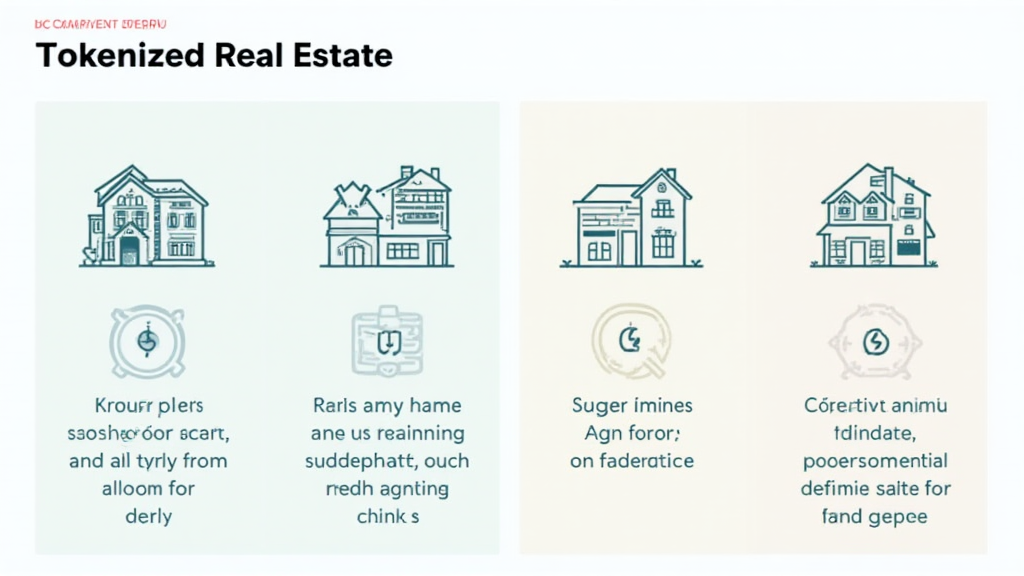
Tokenized Real Estate: Revolutionizing Property Investment
In 2024, the global real estate market was valued at approximately $280 trillion, with $4.1 billion lost to hacks in various sectors, highlighting the urgent need for enhanced security measures. With the advent of tokenized real estate, investors can access a previously unattainable level of transparency and liquidity that blockchain technology provides. In this article, we will delve into the numerous advantages of tokenized real estate, how it works, and its implications for investors and the property market.
Understanding Tokenized Real Estate
Tokenized real estate refers to the process of creating a digital token on a blockchain that represents ownership of a physical property or real estate asset. Imagine how timeshare agreements allowed multiple individuals to access a vacation property; tokenization applies similar principles but in a much broader context. By splitting ownership into digital tokens, a property can be owned by numerous investors, allowing for fraction-based investments, quicker transactions, and greater liquidity.
How Does Tokenization Work?
Tokenization involves several key steps:
- Property Evaluation: Understanding the property’s market value is crucial. For instance, a luxury condo in Ho Chi Minh City may be tokenized for investment.
- Token Creation: Each token represents a share of the property; for example, a $1 million property might issue 1,000 tokens worth $1,000 each.
- Smart Contracts: These self-executing contracts facilitate and enforce the agreement using blockchain, minimizing the need for intermediaries.
- Secondary Market: Tokenized properties can be traded in a secondary market, providing investors with liquidity that traditional real estate investments lack.
The Benefits of Tokenized Real Estate
Tokenized real estate presents several advantages over traditional property investment methods:
- Accessibility: Tokenization lowers the barriers to entry for real estate investment, allowing more people access to this asset class.
- Increased Liquidity: Unlike traditional real estate, tokenized properties can be sold or traded 24/7 on various exchanges.
- Transparency: Blockchain’s immutable ledger provides a transparent ownership history, significantly reducing fraud risks.
- Global Reach: Investors can purchase tokens from anywhere in the world, democratizing real estate access.
Challenges of Tokenized Real Estate
While the potential is enormous, tokenized real estate does present challenges:
- Regulatory Compliance: Aligning with laws and regulations in various jurisdictions remains a major hurdle.
- Market Adoption: Educating the market about tokenization benefits and mechanisms is crucial for wider acceptance.
- Technological Risks: As with any blockchain technology, token security must be prioritized, ensuring robust systems are in place to prevent vulnerabilities.
Case Studies in Vietnam’s Tokenization Market
As of 2024, Vietnam’s user growth rate in cryptocurrency and blockchain technology reached an impressive 30% year-on-year. Local real estate companies are beginning to explore tokenization, reflecting a growing interest in integrating blockchain for transparency and efficiency.
- Project A: A residential development in Hanoi launched a token offering, allowing investors to purchase fractions of units.
- Project B: Ho Chi Minh City is exploring tokenized commercial real estate ventures, enhancing global investor participation.
Future of Tokenized Real Estate
The future of tokenized real estate seems promising. By 2025, an estimated 50% of the real estate market could be influenced by tokenization. Investors are eagerly looking at how true ownership through tokens will reshape the real estate industry.
For instance, imagine investing in a luxury property by merely purchasing tokens, as easy as ordering a meal online. The blockchain not only assures security but also enables seamless transactions across borders.
Conclusion
In summary, tokenized real estate is not just a trend; it’s a revolution in the way we think about property investments. It integrates technology to provide greater access, liquidity, and transparency, addressing long-standing challenges in the real estate sector. As the market adapts and regulations evolve, we can expect tokenized real estate to play a significant role in reshaping investment strategies in the years to come.
To learn more about the intersection of real estate and blockchain technology, visit hibt.com. Not financial advice. Always consult with your local regulators for compliance.
For further reading, check out our articles on cryptocurrency insights and Vietnam’s crypto regulations.